Occurrence of Antimicrobial Resistance Uropathogenic Staphylococcus aureus Isolates from Pregnant Women Attending Antenatal Clinics within Ilorin
DOI :
https://doi.org/10.4314/njpr.v19i2.6sMots-clés :
Antimicrobial resistance, Staphylococcus aureus, UTI, Pregnant womenRésumé
Background: Staphylococus aureus associated with urinary tract infection (UTI) has become a serious health problem especially with the emergence of methicillin resistant Staphylococus aureus (MRSA) due to the acquisition of mecA gene leading to increasing maternal and perinatal burden. This study aimed to evaluate the prevalence of antimicrobial resistance, β-lactamase production and methicillin resistance among uropathogenic S. aureus among pregnant women attending selected antenatal clinics in Ilorin.
Methods: Forty-five (45) out of 79 presumptive uropathogenic S. aureus isolated over a period of 12 months from urine samples of pregnant women were identified using standard bacteriological methods. Antibiogram studies was performed using gentamicin (CN-10µg), ciprofloxacin (CIP-5µg), ofloxacin (OFX-5µg), tetracycline (TE-30µg), sulphamethaxozole-trimethoprim (SXT-25µg), ampicillin (AMP-10 µg), penicillin G (P-10 units), nitrofurantoin (F-30 µg) and cefoxitin (FOX-30 µg) for the detection of MRSA by disc diffusion method. Furthermore, detection of β - lactamase producing S. aureus (BL-PSA) was carried out using Iodometric paper strip method.
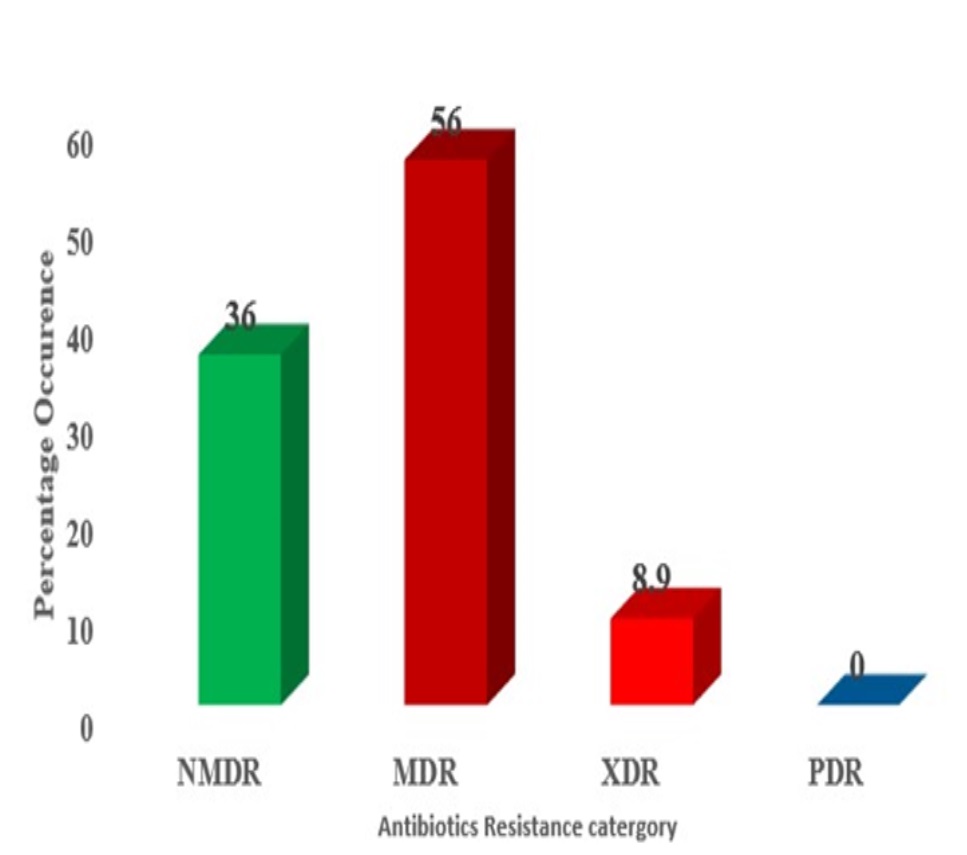
Results: Of the 45 S. aureus isolates, 80% were BL-PSA, MRSA (87%), exhibiting high resistance to penicillin G (97.8%), ampicillin (95.5%), tetracycline (77.8%) and sulphamethaxozole trimethoprim (64.4%). In addition, 56% were multidrug-resistant (MDR) exhibiting 20 different phenotypes with CN-P-SXT-TE-AMP-FOX (15.6%) being the majority. Notwithstanding, S. aureus isolates showed high sensitivity to nitrofurantoin (93.3%) and ofloxacin (91.1%).
Conclusion: This study established an increasing resistance of S. aureus to different classes of antibiotics which emphasize the need for constant surveillance to monitor antimicrobial resistance trends. Routine screening for BL-PSA and MRSA among uropathogenic S. aureus is also advocated in order to reduce the development and spread of MDR isolates.
Références
Téléchargements
Publié
Numéro
Rubrique
Licence
© Nigerian Journal of Pharmaceutical Research 2024

Cette œuvre est sous licence Creative Commons Attribution - Pas d'Utilisation Commerciale - Pas de Modification 4.0 International.
