Rheological and Pharmacological Evaluation of High-Strength Zingiber officinale Topical Ointments for Antinociceptive and Anti-Inflammatory Effects
DOI:
https://doi.org/10.4314/Paraules clau:
Zingiber officinale, antinociceptive, anti-inflammatory, ointmentResum
Background: Zingiber officinale (ZO) is known for its pain-relieving and anti-inflammatory properties, but high-concentration topical formulations have not been well studied. This study evaluates how high extract loading affects rheological behavior and pharmacological activity.
Objectives: This study formulated ZO ointments with varying high concentrations and evaluated the impact of composition on rheological properties, antinociceptive, and anti-inflammatory efficacy in Wistar rats.
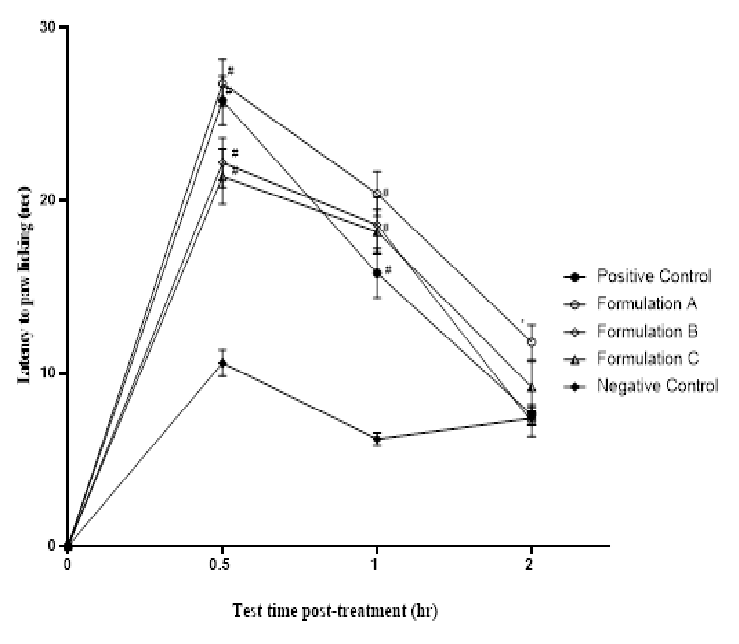
Materials and Methods: Dried ginger rhizomes were macerated in ethanol, and the extract was incorporated into ointment bases at 51.28% (formulation A), 41.03% (formulation B), and 30.77% (formulation C) w/w. Formulations were tested for physicochemical properties and efficacy using the hot-plate paw-lick and egg albumin-induced paw oedema assays. Rats received vehicle, methyl salicylate, or ZO extract (ZOE) ointments.
Results: Higher extract concentrations had better ointment spreadability and appearance. All formulations showed pseudoplastic flow, with viscosity inversely related to extract content. ZOE ointments produced dose-dependent antinociceptive and anti-inflammatory effects, with formulation A having the most significant effects.
Conclusion: Incorporating high concentrations of ZOE into topical ointments significantly enhanced both antinociceptive and anti-inflammatory efficacy. Formulation A provided the optimal balance of superior pharmacological activity and desirable physical properties. These findings indicate that ZOE ointments with higher concentrations have the potential to relieve localized pain and inflammation.
Referències
Descàrregues
Publicat
Número
Secció
Llicència
Drets d'autor (c) 2026 Nigerian Journal of Pharmaceutical Research

Aquesta obra està sota una llicència internacional Creative Commons Reconeixement-NoComercial-SenseObraDerivada 4.0.
